
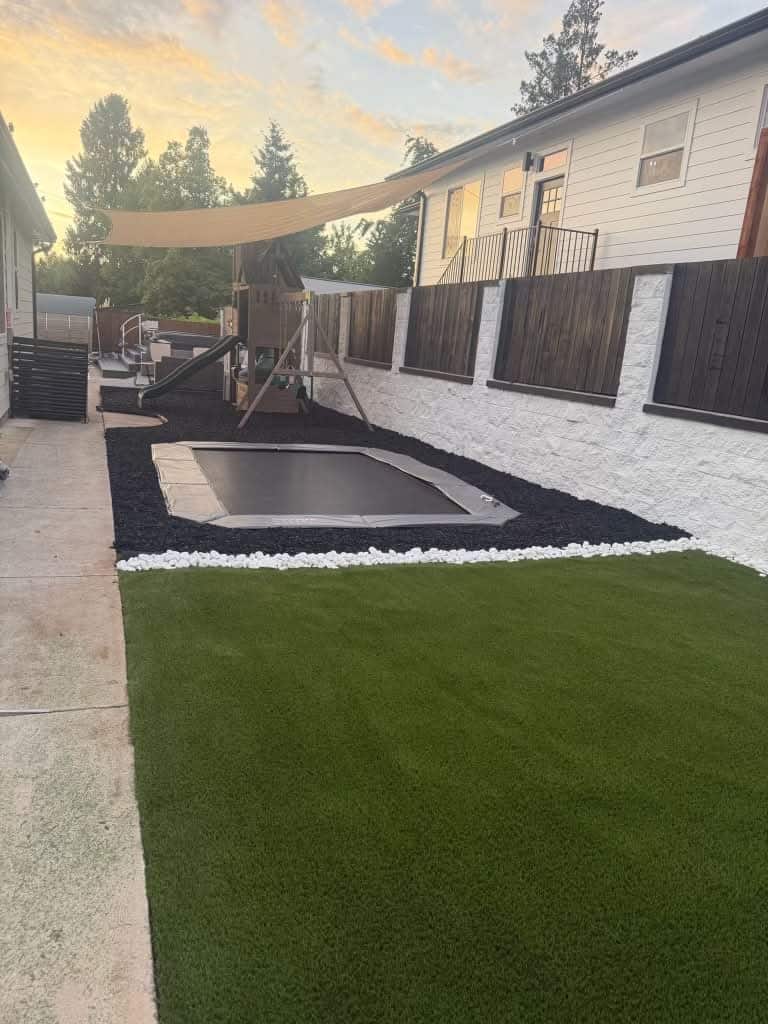
Inground Trampoline Installation in Portland, Oregon
A&N Construction and Excavation provides professional inground trampoline installation across the Portland metro area. We handle the full excavation scope — digging the pit, building the retaining structure, installing drainage, and backfilling — so your trampoline sits flush with the ground, looks clean, and lasts. Call (503) 983-6984 for a free estimate.
What Is an Inground Trampoline?
An inground trampoline is a standard trampoline installed in an excavated pit so the jumping surface sits at ground level instead of raised on legs. The result is a safer, cleaner-looking setup — no tall frame sticking up in the backyard, reduced fall height for kids, and a finished look that blends into the yard.
The installation isn't as simple as digging a hole and dropping a trampoline in. The pit needs proper dimensions, retaining walls to prevent soil from collapsing inward, drainage to handle water that collects at the bottom, and adequate airflow space beneath the mat for proper bounce. Done wrong, you get a flooded pit, caving walls, poor bounce, and a trampoline that rusts out in two years. Done right, it's a permanent backyard feature that lasts a decade or more.
Our Installation Process
- 1
Site Assessment
We visit your property to evaluate the installation location. We check for underground utilities (Oregon 811 locate), soil type, drainage conditions, slope, and proximity to fences, trees, and structures. We also verify the trampoline model and dimensions you've chosen so the pit is sized correctly.
- 2
Excavation
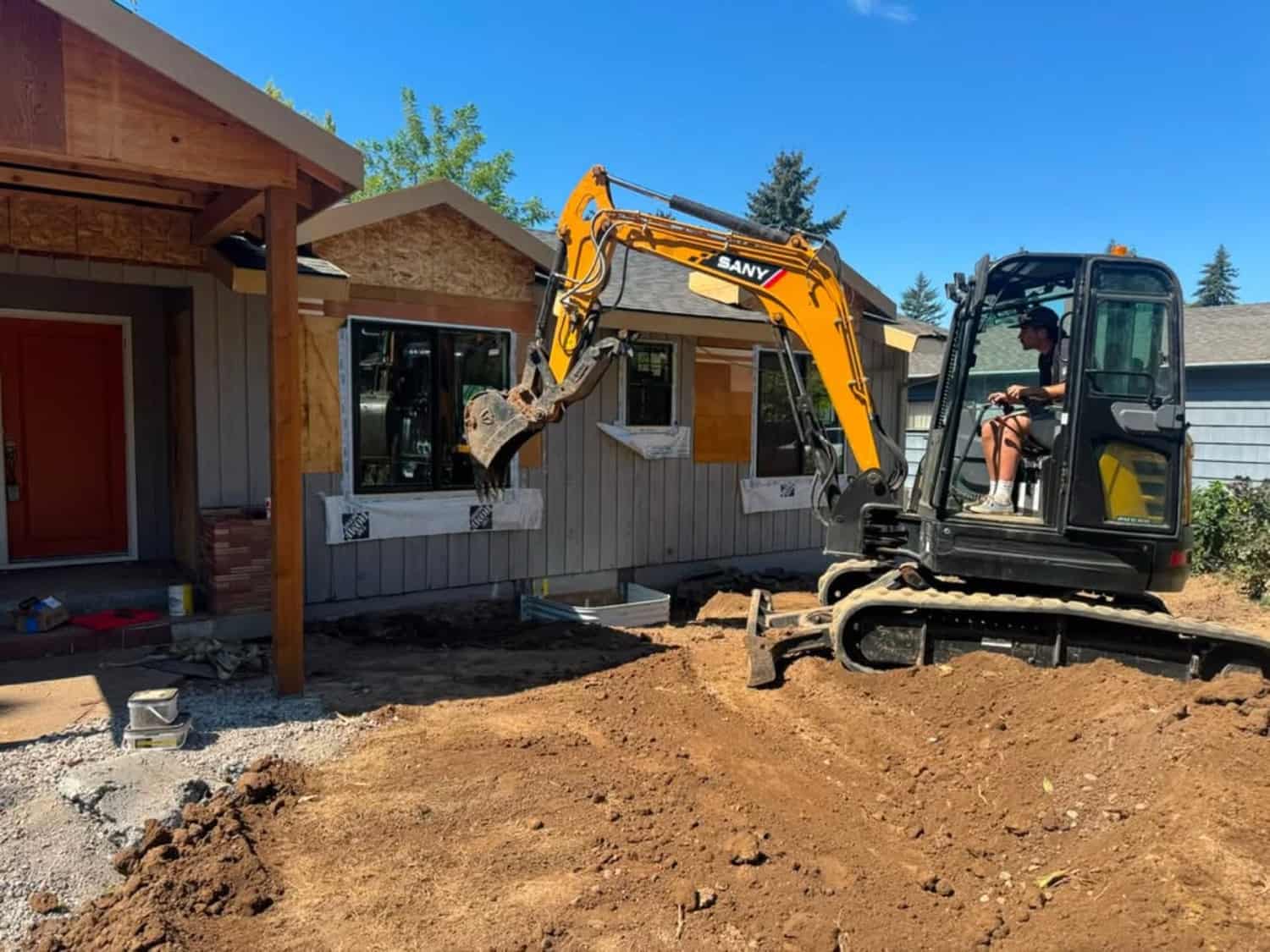
We dig the pit to the exact dimensions required — typically 2 to 3 feet deeper than the trampoline frame height, with 6 to 12 inches of clearance on each side. For a standard 12-foot round trampoline, the pit is roughly 13 feet in diameter and 3 feet deep. That's approximately 15 cubic yards of soil — about one and a half dump truck loads.
- 3
Retaining Wall
We install a retaining structure around the pit perimeter to prevent the surrounding soil from collapsing inward. This is typically a galvanized steel ring, pressure-treated timber frame, or concrete block wall, depending on the soil conditions and budget. The retaining wall also provides a clean edge where the trampoline frame sits.
- 4
Drainage
This is the step most DIY installations skip, and it's why most DIY inground trampolines fail. Portland gets over 40 inches of rain per year. Without drainage, the pit fills with water every time it rains. We install a drainage system at the bottom of the pit — typically a gravel bed with a perforated drain pipe connected to a dry well, French drain, or sump pump — so water drains out instead of pooling under the mat.
- 5
Ventilation
The space below the trampoline mat needs airflow for proper bounce. If the pit is sealed, air can't escape when someone jumps, which kills the bounce and puts stress on the mat. We ensure adequate ventilation gaps in the retaining wall design or install venting channels.
- 6
Backfill and Finish
We backfill around the retaining wall, compact the soil, restore the surrounding grade, and clean up. The trampoline frame is set on the retaining wall at ground level. The finished product is a flush, clean installation with the jumping surface at yard level.
Why Hire a Professional?
Inground trampoline installation is an excavation job, not a weekend DIY project. The pit for a standard 12-foot trampoline generates 15+ cubic yards of soil that needs to be hauled away. That requires an excavator, a dump truck, and somewhere to take the soil. Most homeowners don't have that equipment or the disposal access.
Beyond the digging, the retaining wall and drainage system require construction knowledge. Portland's clay soil is especially prone to collapsing into an unsupported pit, and our rain makes drainage non-optional. A flooded, caving pit with a rusting trampoline frame is worse than no trampoline at all.
We handle the entire excavation scope — dig, retain, drain, backfill, and clean up — with the same equipment and expertise we bring to foundation excavation, drainage systems, and site preparation. You supply the trampoline. We build the pit.
Inground Trampoline Installation Cost in Portland
The cost depends on the trampoline size, soil conditions, drainage requirements, access, and the retaining wall material.
For a standard 12-to-14-foot round inground trampoline installation in Portland, expect $3,000 to $7,000 for the full excavation, retaining wall, drainage, and backfill. Rectangular trampolines (common for gymnastics-style models) are typically larger and deeper, pushing toward the higher end. Difficult access, rocky soil, or complex drainage add cost.
This does not include the trampoline itself — you purchase that separately. We install any brand or model.
Why Choose A&N
We're not a trampoline company — we're an excavation contractor. That's why the pit, the retaining wall, and the drainage are built right. We own our equipment, we know Portland's soil conditions, and we've been digging pits, installing drainage, and building retaining structures across the metro area for years. An inground trampoline pit is a small excavation job with drainage — and that's exactly what we do every day.
Licensed, bonded, and insured — Oregon CCB #268549.
Inground Trampoline Installation Service Areas
We serve the entire Portland, Oregon metro area.
Frequently Asked Questions
How long does inground trampoline installation take?
Do I need a permit for an inground trampoline in Portland?
What happens to the dirt from the pit?
Will the pit flood in Portland's rain?
Can you install any brand of trampoline?
Can you install a trampoline in a sloped yard?
Free Estimate
Ready to Get Started?
Call us today for a free, no-obligation estimate on your project.
A&N Construction and Excavation · CCB #268549