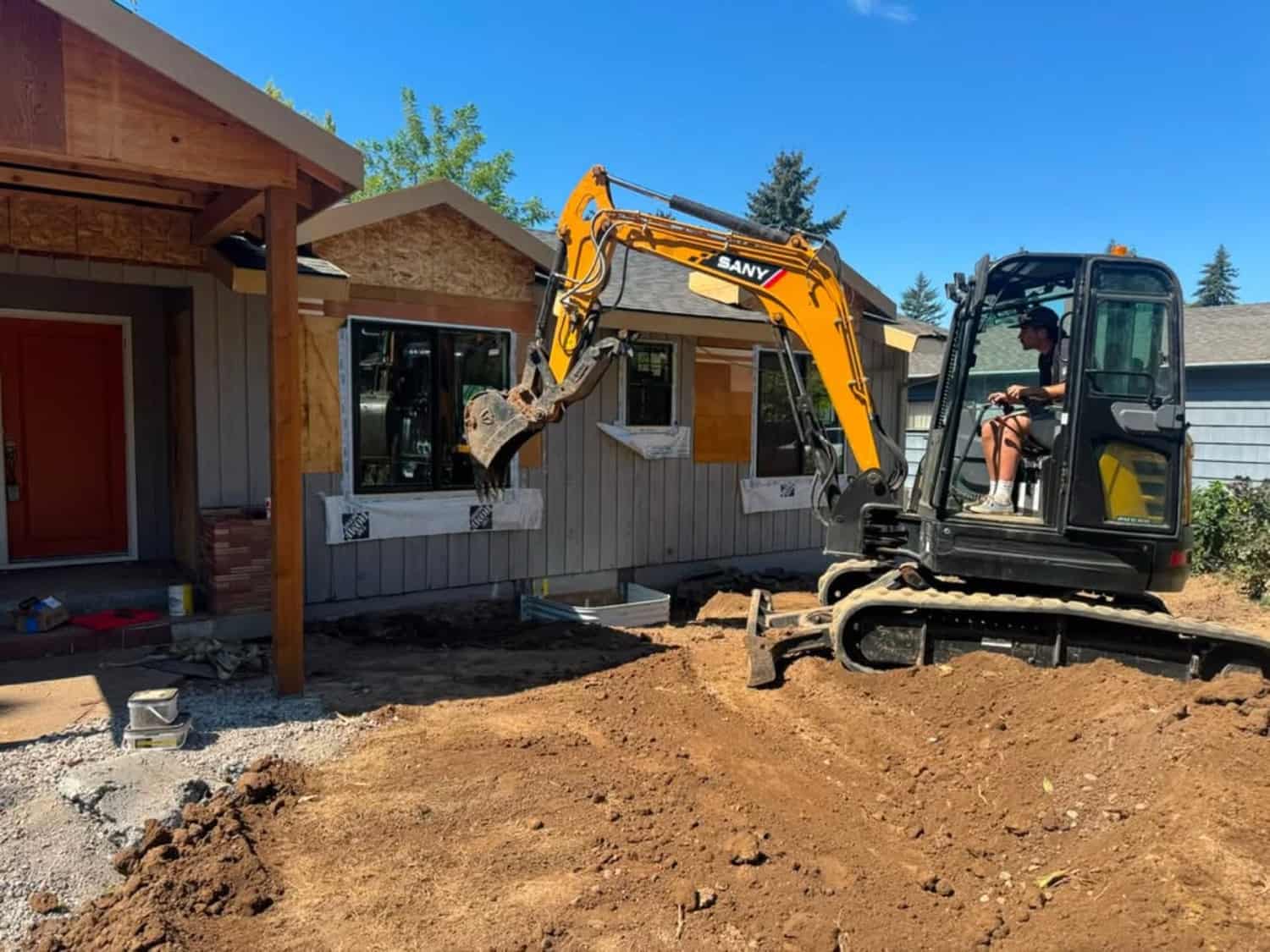
Inground Trampoline Installation in Portland: What It Takes and What It Costs
Thinking about an inground trampoline in Portland? Here's what the installation involves — excavation, drainage, retaining walls — why DIY usually fails, and what it costs to do it right.
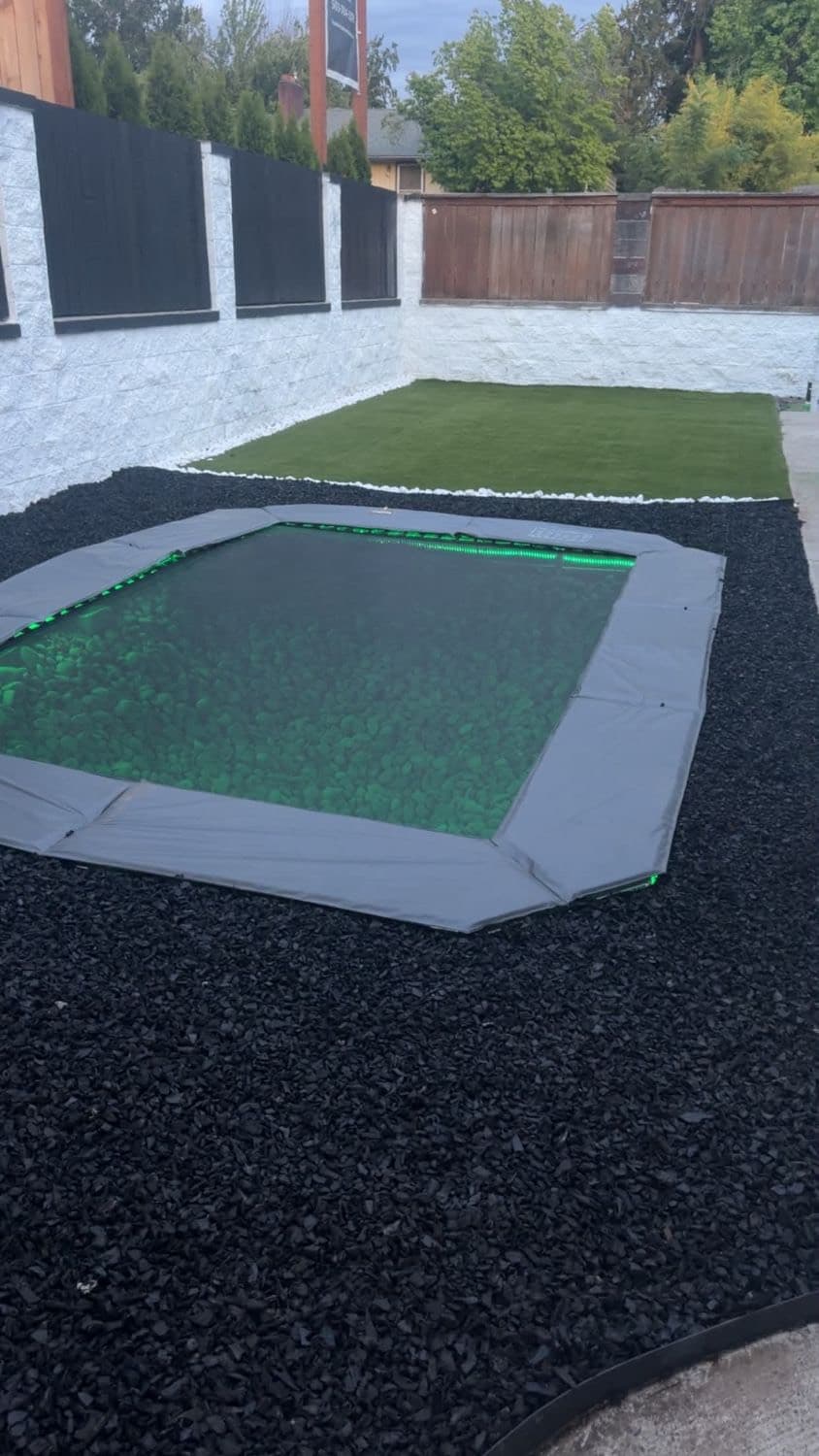
Inground trampolines have become one of the most popular backyard upgrades in the Portland metro area. The appeal is obvious — the jumping surface sits at ground level, there's no tall frame cluttering the yard, and it's safer for kids because the fall height is inches instead of feet.
What isn't obvious is what's underground. A proper inground trampoline installation isn't a hole in the ground with a trampoline dropped in. It's a small excavation project that requires a precisely sized pit, a retaining structure, a drainage system, ventilation, and soil hauling. Skip any of those and you end up with a flooded, collapsing pit and a ruined trampoline.
Here's what the installation actually involves, why Portland's climate makes drainage especially critical, and what it costs to do it right.
Why You Can't Just Dig a Hole
The most common DIY approach is to dig a round hole, drop the trampoline frame in, and call it done. In Portland, here's what happens next.
The walls cave in. Portland's soil — particularly the heavy clay found across East Portland, Gresham, Milwaukie, and Clackamas — does not hold a vertical wall without support. Within weeks (sometimes days, if it rains), the unsupported walls of the pit start slumping inward, narrowing the pit and pushing soil under the trampoline. The trampoline frame shifts, the bounce gets uneven, and the pit gets shallower as soil accumulates at the bottom.
The pit floods. Portland gets 40+ inches of rain per year, most of it between October and May. A pit with no drainage is a pond. Water pools at the bottom, sits against the trampoline frame (which rusts), soaks into the mat (which stretches and degrades), and breeds mosquitoes. Bailing out a 3-foot-deep, 13-foot-wide pit every time it rains is not a sustainable plan.
The bounce dies. When someone jumps on a trampoline, the mat pushes air downward. On an above-ground trampoline, that air escapes freely in all directions. In a sealed pit, the air has nowhere to go — it compresses beneath the mat and kills the bounce. The trampoline feels dead and stiff. Proper ventilation channels or gaps in the retaining wall are required to let air escape.
What a Proper Installation Looks Like
The Pit
The pit needs to be sized precisely for the trampoline model. Too narrow and the frame doesn't fit or the mat contacts the walls during use. Too shallow and the mat sits above ground level. A standard 12-foot round trampoline needs a pit roughly 13 feet in diameter (6 inches of clearance on each side) and about 3 feet deep (the frame height plus clearance underneath).
That's approximately 15 cubic yards of soil — about one and a half dump truck loads. This is why a professional excavation crew with the right equipment makes sense. Digging 15 yards of Portland clay by hand is a multi-day nightmare. An excavator does it in a few hours.
The Retaining Wall
A retaining structure around the pit perimeter keeps the soil from collapsing. Options include galvanized corrugated steel rings (purpose-built for inground trampolines), pressure-treated timber frames, or concrete block walls. The retaining wall also provides a level, stable edge for the trampoline frame to sit on.
The choice of material depends on budget and soil conditions. Steel rings are the most common for residential installations — they're purpose-built for this, go in fast, and last 15-20+ years. Timber frames are cheaper but require proper treatment and construction to resist Portland's moisture. Concrete block is the most durable but also the most expensive and labor-intensive.
Drainage
This is the most critical component in Portland. Every inground trampoline pit in this climate needs a drainage system. The standard approach is a 4-6 inch gravel bed at the bottom of the pit with a perforated drain pipe running to a discharge point — a dry well, a French drain line, or a connection to the property's existing stormwater system.
Some installations use a sump pump in the pit bottom for properties where gravity drainage isn't possible (flat lots with high water tables). This works but adds a mechanical component that needs occasional maintenance.
Without drainage, the pit becomes a seasonal pond. With proper drainage, rainwater that enters the pit drains out automatically and the pit stays dry.
Ventilation
Air movement under the mat is essential for bounce quality. The retaining wall design needs to include ventilation — either gaps or cutouts in the wall, vent pipes, or a retaining structure that isn't fully sealed (like spaced timbers). The airflow channels also help the pit dry out faster after rain.
Backfill and Finish
After the retaining wall and drainage are installed, the crew backfills around the outside of the wall, compacts the soil, restores the surrounding grade, and cleans up. The trampoline frame is set on the retaining wall at ground level. If done right, the finished installation looks like the trampoline grew out of the lawn — clean edge, flush surface, no visible hardware.
How Long Does It Take?
A professional installation takes 1 to 2 days for most residential projects. Day one is excavation, soil hauling, and retaining wall installation. Day two (if needed) is drainage, backfill, grade restoration, and trampoline placement. Straightforward installations in easy soil with good access can be done in a single day.
DIY installations, for reference, typically take a long weekend at minimum (assuming you can source equipment for the digging and a way to haul the soil). Most homeowner attempts stretch over multiple weekends as the reality of moving 15 cubic yards of clay by hand sets in.
What It Costs in Portland
Professional installation (excavation, retaining wall, drainage, backfill, cleanup): $3,000 to $7,000.
The range depends on trampoline size (12-foot round is lower, 14-foot or rectangular is higher), soil conditions (clay and rock add time), access (tight backyards behind fences cost more), drainage complexity (gravity drain to a nearby low point is cheaper than a new dry well), and retaining wall material (steel ring is mid-range, concrete block is higher).
This does not include the trampoline itself. Inground-specific trampolines from brands like Avyna, Berg, Acon, and Capital Play typically run $800 to $2,500 depending on size and quality. Standard above-ground trampolines can also be installed inground with some modifications, though purpose-built inground models fit better and last longer.
For comparison:
- DIY dig (equipment rental, dump fees, retaining material, drainage material): $800 to $2,000 in materials and rental plus several days of hard labor and no guarantee the drainage or retaining wall will hold up
- Professional installation with proper engineering: $3,000 to $7,000 and it's done in 1-2 days with a result that lasts
Portland-Specific Considerations
Clay soil. Most of the Portland metro area sits on heavy clay. Clay is difficult to dig (especially when wet), doesn't drain well, and exerts lateral pressure on retaining walls. Professional installations in clay soil use appropriately engineered retaining structures and drainage systems designed for low-percolation soil.
Rain and water table. Portland's wet season makes drainage the single most important component. A pit that works fine in July will flood in November without a drainage system. The design needs to handle sustained heavy rain, not just occasional showers.
Tree roots. Portland's mature trees send roots everywhere. If the installation site is near a large tree, roots may need to be cut during excavation (check whether the tree requires a permit for root pruning) and a root barrier may be needed to prevent roots from growing into the pit and damaging the retaining wall or drainage.
Utility lines. Always call Oregon 811 before digging. Underground water, gas, electrical, and sewer lines run through backyards across Portland. An excavation crew coordinates utility locates as standard practice. A DIY installer might not think of it — and hitting a gas line with a shovel is not a learning experience you want.
The Bottom Line
An inground trampoline is a backyard feature that adds real value — it's safer, looks better, and lasts longer than an above-ground setup. But the installation is construction work, not assembly. The pit, the retaining wall, and the drainage system need to be built right, especially in Portland's climate.
If you're planning an inground trampoline in the Portland metro area, call (503) 983-6984 or request a free estimate. We handle the full excavation — dig, retain, drain, backfill, and cleanup. You supply the trampoline. We build the pit.