How Much Fill Dirt Do I Need? A Portland Homeowner's Guide
How to calculate how much fill dirt your project needs, what types to use, and what fill dirt costs in Portland, OR. Covers grading, backfill, and leveling projects.
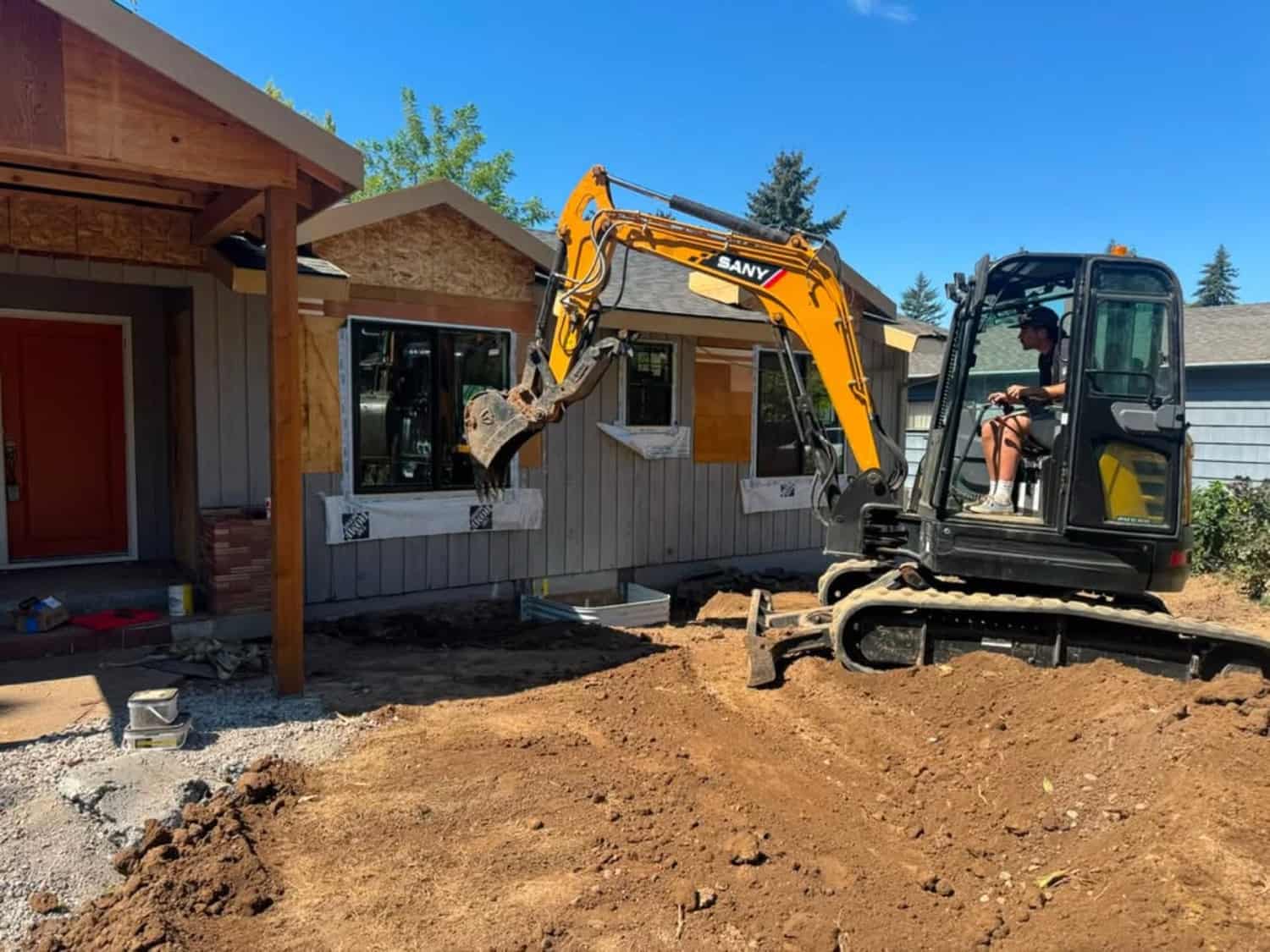
Whether you're filling a low spot in your yard, backfilling a trench, raising a grade for drainage, or preparing a building pad, the first question is always: how much dirt do I actually need?
Getting it right matters. Order too little and you're waiting for another delivery while the crew sits idle. Order too much and you're paying to haul the excess away. Here's how to calculate what you need, what type to order, and what it costs in the Portland area.
How to Calculate Volume
Fill dirt is measured in cubic yards. One cubic yard is a cube that's 3 feet on each side — about the size of a washing machine. Here's the formula.
Length (feet) × Width (feet) × Depth (feet) ÷ 27 = Cubic yards
The division by 27 converts cubic feet to cubic yards (3 × 3 × 3 = 27).
Example 1: Filling a low spot. You have a depression in your yard that's roughly 20 feet long, 10 feet wide, and averages 6 inches deep. That's 20 × 10 × 0.5 = 100 cubic feet ÷ 27 = 3.7 cubic yards. Order 4 yards.
Example 2: Raising a grade. You need to raise a 30-foot × 40-foot area by 12 inches to improve drainage away from the house. That's 30 × 40 × 1 = 1,200 cubic feet ÷ 27 = 44.4 cubic yards. Order 47-48 yards to account for compaction.
Example 3: Backfilling a trench. A utility trench is 60 feet long, 2 feet wide, and 3 feet deep. That's 60 × 2 × 3 = 360 cubic feet ÷ 27 = 13.3 cubic yards. But if a pipe is in the trench, subtract the pipe volume — for a standard 4-inch pipe, this is negligible, so still order about 14 yards.
Account for Compaction
Fill dirt compresses when compacted. Loose fill loses about 20-25% of its volume after proper compaction. So if you need 10 cubic yards of compacted fill in place, order 12-13 cubic yards of loose fill.
This is the mistake most homeowners make — calculating the exact volume and ordering that amount, then ending up short after compaction. Always add 20-25%.
Irregular Shapes
If the area isn't a neat rectangle, break it into smaller rectangles and triangles, calculate each section separately, and add them up. Or take the longest dimension and widest dimension, calculate as a rectangle, and knock off 10-20% if the shape is significantly irregular.
Types of Fill Dirt
Not all dirt is the same. What you need depends on the project.
Clean fill (structural fill). Subsoil with no organic matter, debris, or contaminants. Used for backfilling foundations, filling behind retaining walls, raising grades for structural purposes, and any fill that will support weight. This is what you want under driveways, building pads, and foundations. It compacts well and doesn't decompose or settle over time.
Topsoil. The dark, nutrient-rich top layer of soil. Used for landscaping, gardens, and lawn areas. You don't use topsoil as structural fill — it contains organic matter that decomposes and settles. Topsoil goes on top of clean fill as the final 4-6 inches for growing grass or plants.
Screened fill. Clean fill that's been run through a screen to remove rocks, roots, and debris. Easier to work with and spread evenly. Costs more than unscreened fill.
Pit run. Unscreened native soil straight from an excavation site. The cheapest option and fine for large fill projects where you're filling a big area and compacting in lifts. May contain rocks, clay chunks, and roots.
Crushed rock/gravel. Not dirt, but worth mentioning because it's used as base material under concrete, asphalt, and pavers. Common sizes in Portland are 3/4-inch minus (crushed with fines that compact well) and 1-1/2-inch minus.
What Type for What Project
Filling a low spot in the yard for grass: Clean fill for the bulk, topsoil for the top 4-6 inches.
Raising grade for drainage: Clean fill, compacted in 6-8 inch lifts. Topsoil on top if you're planting.
Backfilling a foundation or retaining wall: Clean structural fill, compacted to engineering specs. Never topsoil.
Backfilling a utility trench: Clean fill or the original excavated material (if it's suitable), compacted in lifts with bedding material around the pipe.
Driveway base preparation: Crushed rock, not dirt. Typically 3/4-inch minus, compacted to 95% density.
Garden beds: Topsoil or a topsoil/compost mix. No clean fill.
Fill Dirt Cost in Portland
Pricing depends on the type of material, the quantity, the delivery distance, and whether you need it placed and compacted or just dumped.
Clean fill dirt: $15 to $30 per cubic yard delivered. Sometimes available for free or near-free from nearby excavation projects that need to dispose of clean soil — ask your excavation contractor.
Screened fill: $25 to $40 per cubic yard delivered.
Topsoil: $30 to $50 per cubic yard delivered. Quality varies — ask about organic content and whether it's screened.
Crushed rock (3/4-minus): $25 to $45 per cubic yard delivered.
Pit run: $10 to $20 per cubic yard delivered. Cheapest option for large fills.
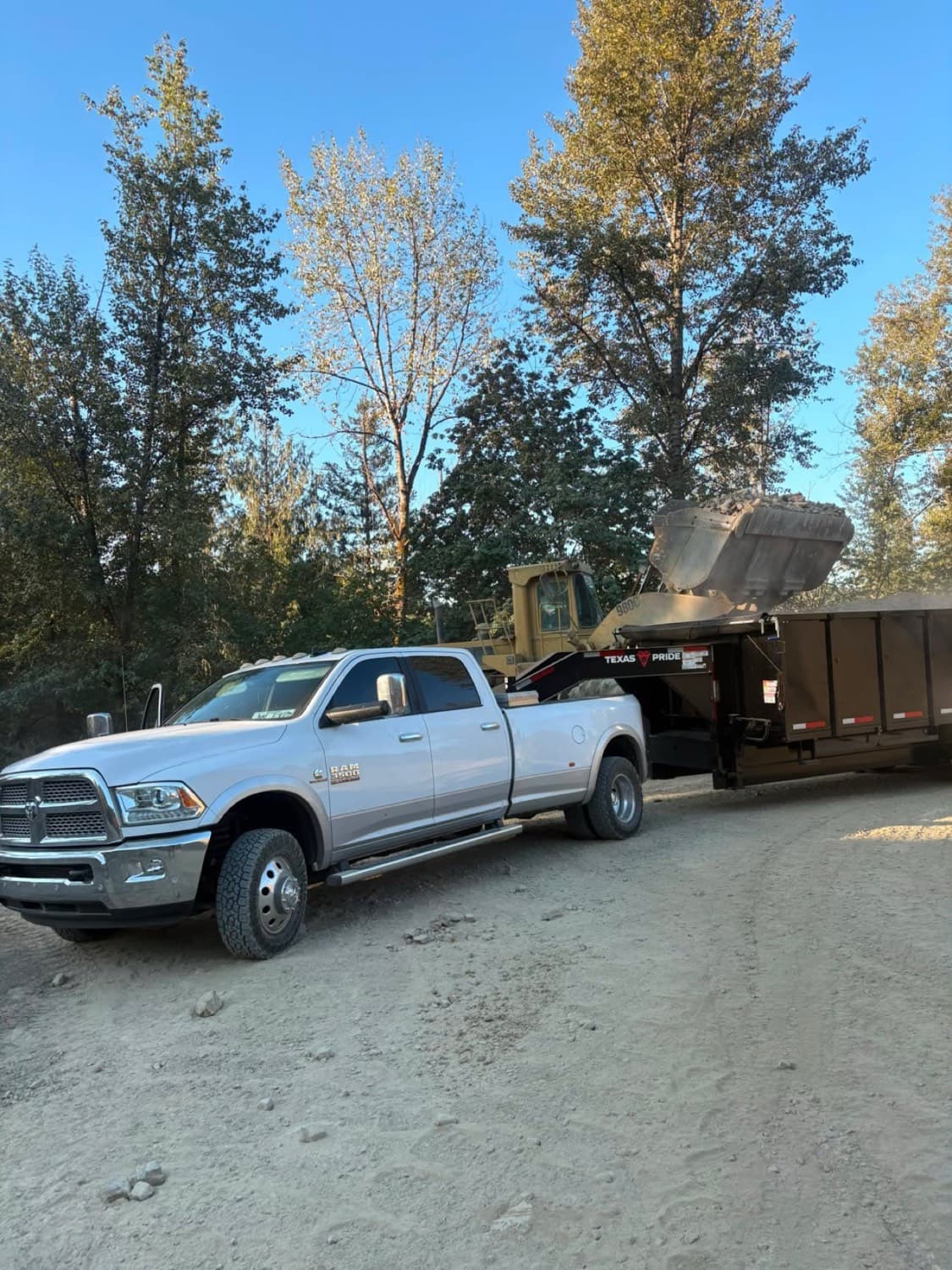
Delivery charge: Most suppliers charge a flat delivery fee of $50 to $150 per load on top of the material cost. A standard dump truck carries 10-12 cubic yards per load. For small quantities (under 5 yards), you may be able to pick it up yourself with a truck and trailer.
Spreading and compaction: If you need the fill placed, spread, graded, and compacted — not just dumped in a pile — that's a hauling and grading service. Expect $300 to $800+ depending on the volume and site conditions. This is where hiring an excavation contractor versus DIY makes the most difference — proper compaction in lifts requires equipment (plate compactor, roller) and knowledge of how each soil type behaves.
How to Order
Know your volume. Use the formula above and add 20-25% for compaction.
Know your type. Match the material to the project. If you're not sure, tell the supplier what you're doing and they'll recommend the right material.
Know your access. Can a dump truck get to where the fill needs to go? If not, the driver will dump it as close as possible and you'll need to move it from there. Tight sites may need a smaller truck (which means more loads) or equipment to transfer the material.
Timing. In Portland's wet season (October through May), fill delivery and placement gets more complicated. Wet fill is heavier, harder to compact properly, and can make a mess of your yard and the street. If your project can wait for dry weather, it'll go smoother and may cost less.
Get It Delivered and Placed
At A&N Construction and Excavation, we deliver, place, spread, and compact fill dirt, topsoil, gravel, and crushed rock across the Portland metro area. We don't just dump a pile in your driveway — we put the material where it needs to go, grade it to the right slope, and compact it to spec. Call (503) 983-6984 or request a free estimate.