How Grading Protects Your Home's Foundation in Portland
Poor grading causes foundation damage, flooding, and erosion. Learn how proper grading protects your Portland home, signs your grading is wrong, and what regrading costs.
Most foundation problems don't start with the foundation. They start with the ground around it.
When the soil around your home slopes toward the foundation instead of away from it, every rainstorm pushes water against the foundation walls. In Portland, where annual rainfall exceeds 40 inches, that's a lot of water finding its way into places it shouldn't be — crawlspaces, basements, the soil under your footings. Over time, this causes cracks, settling, wood rot, mold, and structural damage that costs far more to fix than the grading work that would have prevented it.
What Grading Means and Why It Matters
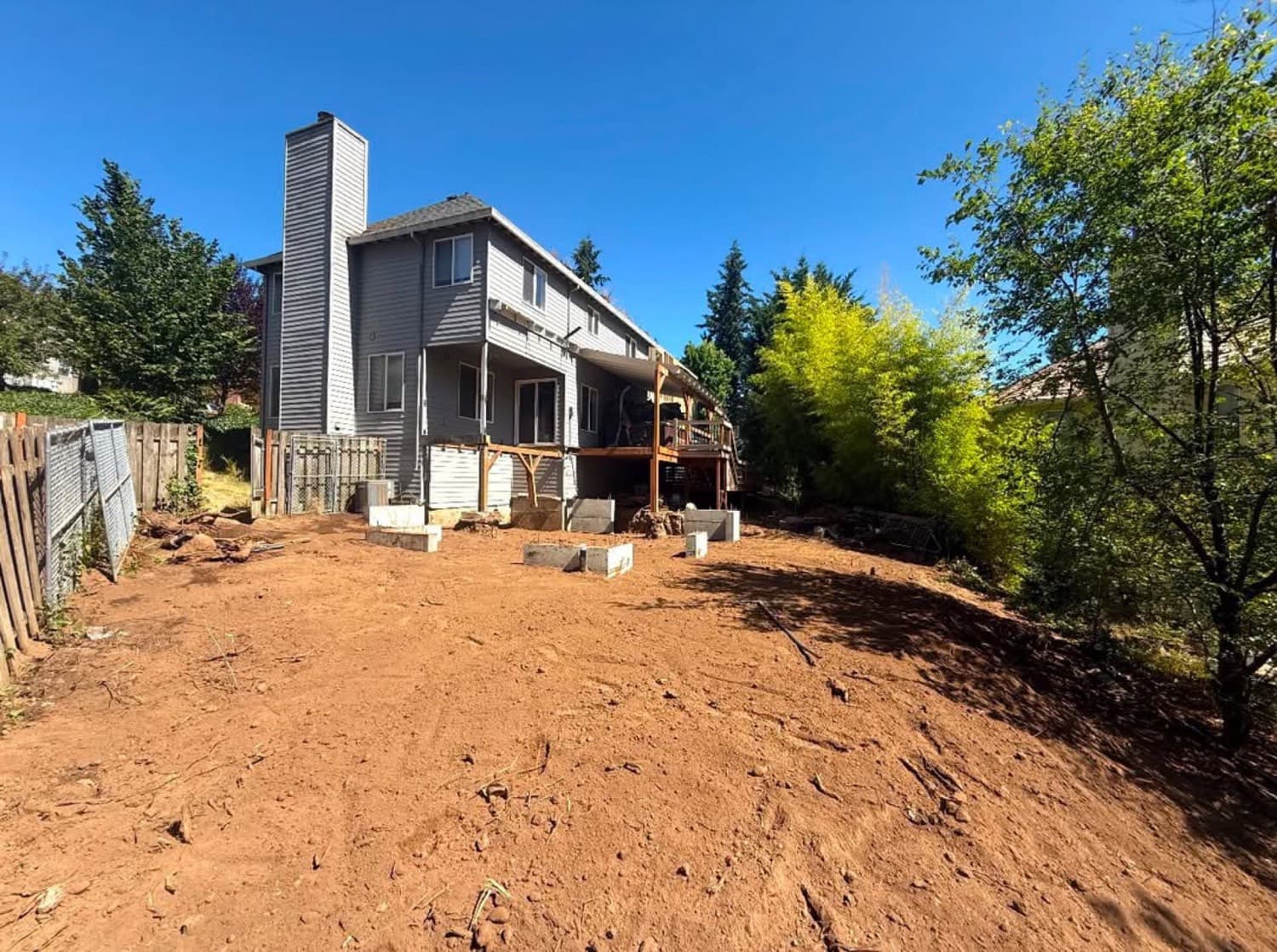
Grading is the slope of the ground surface. For a home, proper grading means the soil around the foundation slopes downward, away from the house on all sides. This directs rainwater and snowmelt away from the foundation rather than letting it pool against the walls or soak into the soil next to the footings.
The standard recommendation is a minimum slope of 6 inches of fall over the first 10 feet from the foundation. That's roughly a 5% grade — enough for water to flow away reliably even during heavy rain, but gentle enough that your yard doesn't feel like a hillside.
This sounds simple. In practice, many Portland homes don't have it. Homes settle over time. Landscaping changes alter drainage patterns. Additions and patios get built without considering grade. Soil erodes from runoff. Trees grow root systems that change the surface contour. And plenty of homes were graded poorly from the start.
Signs Your Grading Is Wrong
Water pools near the foundation after rain. If you see standing water within a few feet of the house after a rainstorm, the grade is directing water toward the foundation rather than away. Walk around the house during or after a heavy rain and watch where water flows.
Damp or wet crawlspace. If your crawlspace has standing water, moisture on the walls, or consistently high humidity, water is reaching your foundation from the surrounding soil. This is often a grading problem, a drainage problem, or both.
Cracks in the foundation. Horizontal cracks in foundation walls often indicate hydrostatic pressure — water-saturated soil pushing against the wall. Stair-step cracks in block foundations and vertical cracks in poured concrete can also indicate water-related settling. Not all cracks are grading-related, but many are.
Efflorescence on foundation walls. White, chalky mineral deposits on concrete or block walls mean water is passing through the wall and evaporating on the surface, leaving minerals behind. This is a reliable indicator that moisture is reaching the foundation.
Erosion channels in the yard. If rain carves visible paths in the soil around your house, the water is moving fast and concentrated — and it may be running toward the foundation in places.
Musty smell in the house. A persistent musty odor, especially on the lower level, often comes from mold or mildew in the crawlspace or basement driven by moisture from poor drainage.
Sticking doors and windows. When a foundation settles unevenly due to water washing out soil from one side, the house shifts slightly. Doors and windows that suddenly stick or won't close properly can be a symptom.
How Poor Grading Damages Foundations
The damage happens through three mechanisms, and Portland's climate makes all three worse.
Hydrostatic pressure. When soil next to the foundation is saturated with water, it pushes against the foundation walls. Concrete is strong in compression but weak in tension — sustained lateral pressure from water-logged soil can crack walls, bow them inward, and eventually cause structural failure. This is most common in homes with basements or deep crawlspaces where the walls retain more soil.
Erosion and washout. Water flowing toward the foundation erodes the soil that supports the footings. As supporting soil washes away, the foundation can settle unevenly — one corner drops while the rest stays put. This causes cracks, door and window alignment issues, and in severe cases, structural instability.
Freeze-thaw cycling. Portland's winters include occasional freezing temperatures. Water that pools against the foundation and freezes expands, pushing against the concrete. Repeated freeze-thaw cycles gradually break down the concrete surface and widen existing cracks. While Portland doesn't freeze as often as colder climates, even a few cycles per winter contribute to long-term damage.
The Fix: Regrading
Regrading means reshaping the soil around the house to achieve proper drainage slope. It's the most direct and often most cost-effective solution to water problems caused by poor surface drainage.
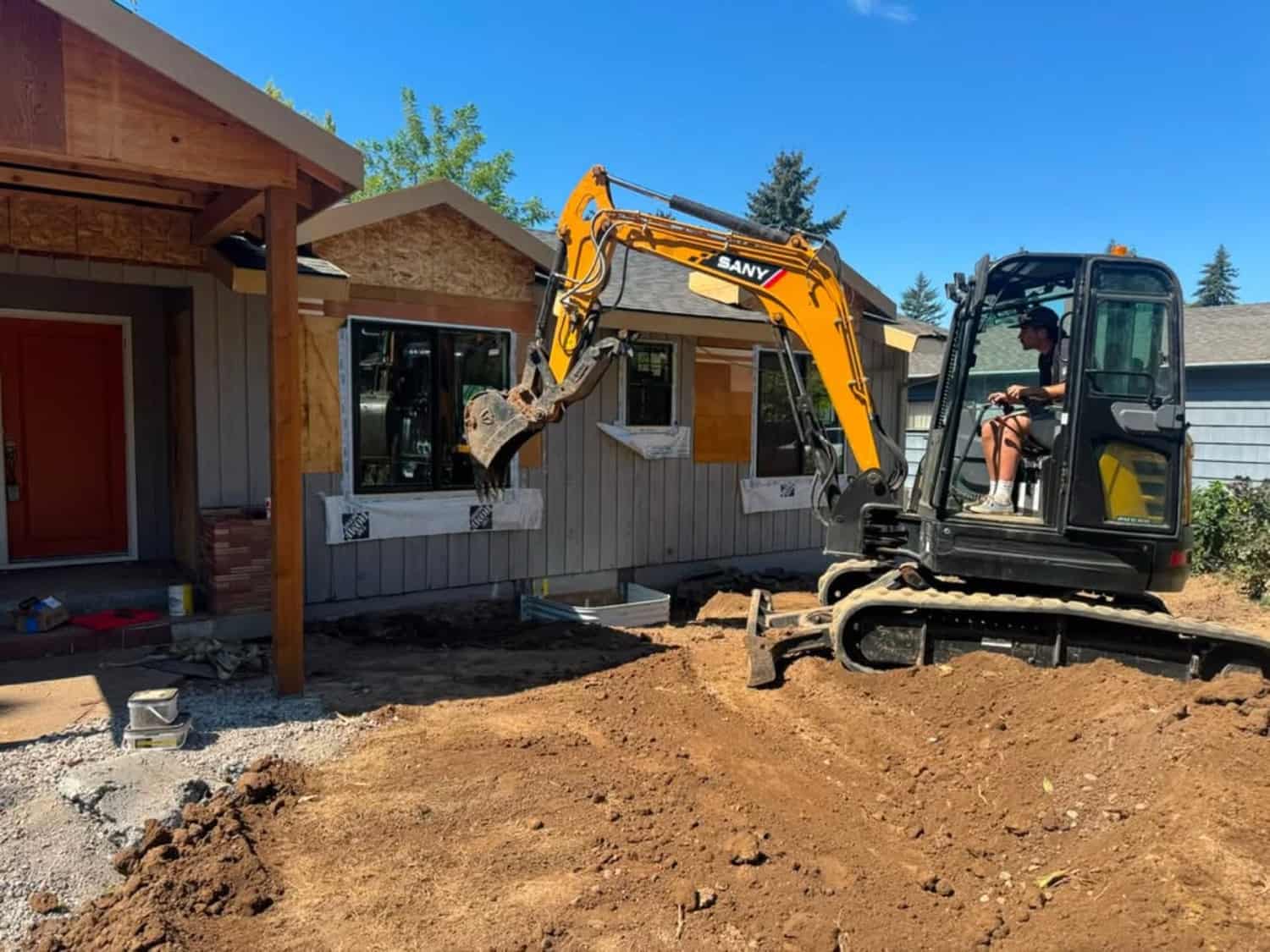
What's involved: A crew brings in a skid steer or small excavator and reshapes the grade around the foundation. This typically means adding clean fill against the foundation and tapering it down to the existing grade at about 5% slope. In some cases, soil needs to be removed from areas that are too high. The finished grade is then compacted and either seeded, sodded, or covered with mulch or rock.
Important details: The finished grade must keep soil at least 6 inches below any wood framing or siding to prevent wood-to-soil contact (which causes rot). Basement window wells need to be maintained or raised to match the new grade. Downspouts and their discharge points may need to be extended or rerouted to work with the new contours.
Regrading alone isn't always enough. If the problem is subsurface water (groundwater flowing through the soil toward the foundation), regrading the surface won't stop it. You may also need a French drain to intercept subsurface water, or foundation waterproofing to seal the walls. The right solution depends on where the water is coming from — surface runoff, subsurface groundwater, or both.
Regrading Cost in Portland
For regrading around a residential foundation, expect $2,000 to $8,000 in Portland depending on the house's perimeter length, how much fill is needed, accessibility, and what surface restoration is required.
A simple regrade on two sides of a house with easy access: $2,000 to $4,000.
A full-perimeter regrade on a larger home with fill import and landscaping restoration: $5,000 to $8,000.
If the regrading is paired with a French drain installation or foundation waterproofing, the excavation crew can do both in the same mobilization, which is more cost-effective than doing them as separate projects.
For comparison, fixing foundation damage caused by years of poor drainage can cost $10,000 to $50,000+ depending on the severity. Regrading is the prevention.
Prevention for New Construction
If you're building a new home in Portland, proper grading is something your excavation contractor should get right the first time during site preparation. The key requirements are establishing 5% minimum slope away from the foundation on all sides, compacting fill properly so it doesn't settle and reverse the grade over time, integrating downspout discharge routes into the grading plan, and accounting for neighboring properties' drainage patterns.
It's much cheaper to grade correctly during construction than to fix it after the house is built, the landscaping is in, and the hardscape is poured.
Get Your Grade Assessed
If you're seeing signs of water problems around your Portland home, call (503) 983-6984 or request a free estimate. We'll walk the property, evaluate the grade, and recommend the most cost-effective solution — whether that's regrading, drainage, or a combination. We serve Portland, Beaverton, Lake Oswego, Milwaukie, Tigard, Gresham, Happy Valley, and surrounding cities.