Foundation Waterproofing vs. Dampproofing: What Portland Homeowners Need to Know
Dampproofing and waterproofing are not the same thing. Learn the difference, which one your Portland home has, and when you need to upgrade.
If your Portland home has moisture in the crawlspace or basement, you might be told you need "waterproofing." But when you start getting quotes, you'll hear two different terms — dampproofing and waterproofing — sometimes used interchangeably. They're not the same thing. One is a moisture retarder. The other is a full water barrier. The difference matters, especially in Portland where foundations deal with 40+ inches of annual rainfall and seasonally high water tables.
What Is Dampproofing?
Dampproofing is a thin coating — usually asphalt-based (black tar) — sprayed or rolled onto the exterior of a foundation wall. It resists moisture vapor from passing through the concrete but does not stop liquid water under pressure.
Most homes built in Portland before the 1990s have dampproofing on their foundations. It was the code minimum at the time of construction. If you've ever seen the black coating on a foundation wall during excavation, that's dampproofing.
Dampproofing works in dry conditions or where the soil stays relatively dry. It handles the minor moisture that naturally migrates through concrete. It does not handle water that's being pushed against the wall by hydrostatic pressure — which is exactly what happens when saturated Portland clay soil presses against your foundation during the rainy season.
What Is Foundation Waterproofing?
Foundation waterproofing is a thicker, more robust system designed to stop both moisture vapor and liquid water under pressure. A full waterproofing system typically includes a rubberized or sheet membrane applied to the cleaned foundation wall, a drainage board (dimple mat) installed over the membrane to protect it and provide an additional drainage plane, and a footing drain (perforated pipe in gravel) at the base of the foundation to collect and redirect water before it builds pressure against the wall.
Waterproofing creates a continuous, sealed barrier. Water that reaches the wall is stopped by the membrane and redirected downward by the drainage board into the footing drain, which carries it away to a dry well, sump pump, or storm drain connection.
Key Differences
Thickness and material. Dampproofing is a single thin coat of asphalt emulsion — about 1/16 inch thick. Waterproofing membranes are thicker (1/16 to 1/4 inch depending on the product), made of rubberized asphalt, polymer-modified asphalt, or sheet membranes, and are designed to bridge cracks.
Water pressure. Dampproofing cannot resist hydrostatic pressure. When saturated soil pushes water against the wall, it passes through. Waterproofing is rated to resist hydrostatic pressure — it holds back water that's actively being pushed against the foundation.
Crack bridging. Foundations crack. Dampproofing cracks with them, breaking the seal. Quality waterproofing membranes are elastomeric — they stretch to bridge cracks up to 1/16 inch without losing their seal.
Drainage component. Dampproofing has no drainage system — it's just a coating. Waterproofing includes a drainage board and footing drain that actively manage water, reducing the pressure on the membrane and the wall.
Lifespan. Asphalt dampproofing degrades over time, especially when exposed to soil moisture and temperature fluctuations. After 15-30 years, it's often brittle, cracked, or partially dissolved. Quality waterproofing membranes are rated for 30+ years and maintain their elasticity.
Which One Does Your Portland Home Have?
If your home was built before the early 1990s, you almost certainly have dampproofing — or nothing at all. Older Portland homes (pre-1970s) may have no moisture treatment whatsoever on their foundation walls.
If your home was built after 2000 and has a basement, it may have waterproofing depending on the builder and the local code requirements at the time.
The only way to know for sure is to expose the foundation wall. If it's a thin, flat black coating that's brittle or flaking, it's dampproofing. If there's a textured membrane and a drainage board (a plastic sheet with raised bumps), it's waterproofing.
When to Upgrade from Dampproofing to Waterproofing
If your crawlspace or basement is dry and you have no moisture issues, your dampproofing (or lack thereof) may be adequate for your situation. Not every Portland home needs full waterproofing.
But you should consider upgrading if you see water entering through the foundation walls during heavy rain, your crawlspace has standing water during the wet season, there's visible efflorescence (white mineral deposits) on the interior foundation walls, you smell persistent musty odors from below grade, you're planning to finish a basement as living space (moisture-sensitive materials like drywall and carpet require a waterproofed space), or you're already excavating around the foundation for another reason (adding waterproofing while the walls are exposed is far cheaper than doing it as a separate project).
The Waterproofing Process
Foundation waterproofing requires excavating around the house to expose the foundation walls. Here's the process.
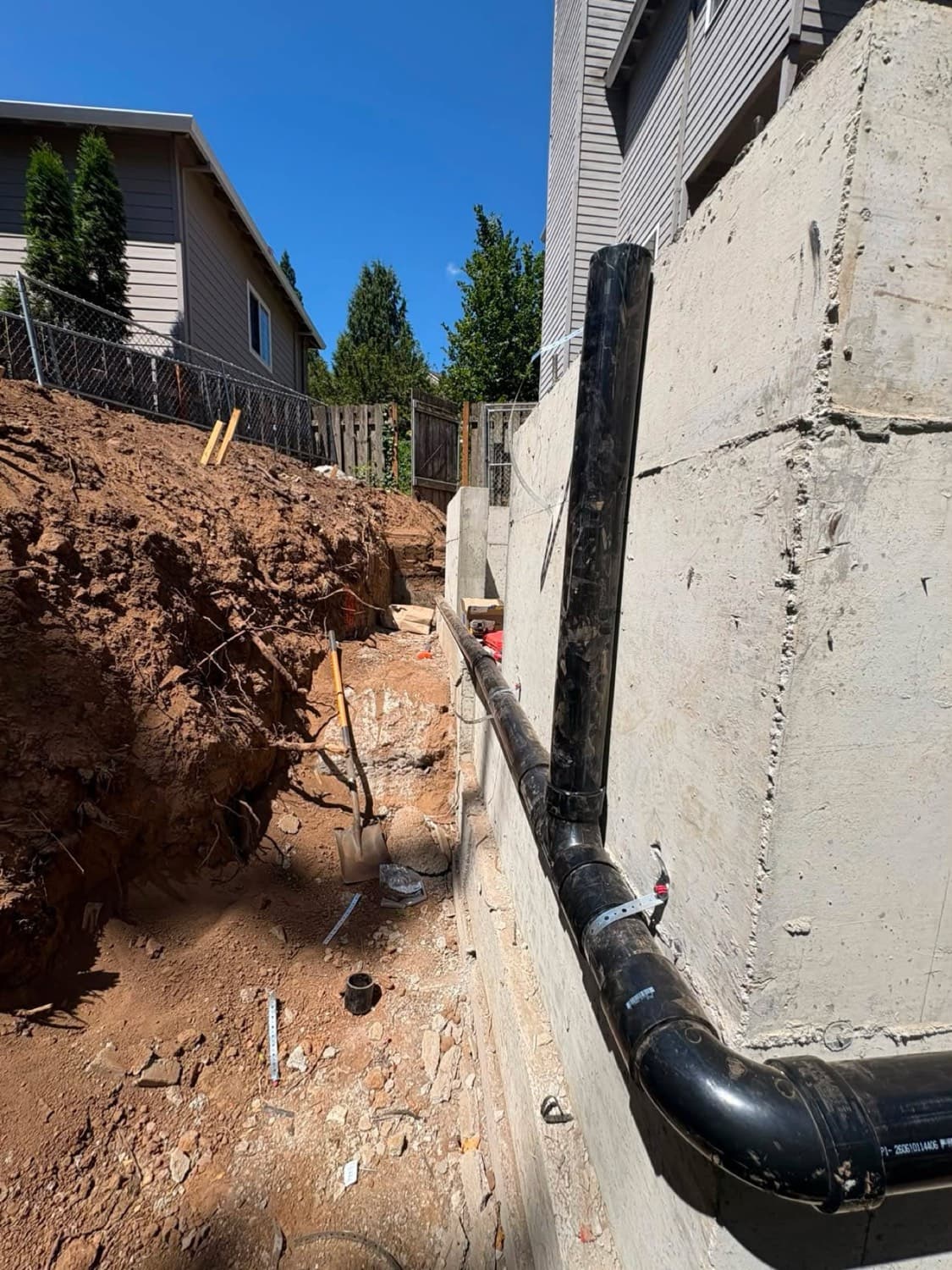
The crew excavates a trench around the perimeter of the house, typically 6-8 feet deep (to the bottom of the footing). The exposed walls are cleaned — old dampproofing, dirt, and loose concrete are removed. Any cracks in the foundation are repaired. The waterproofing membrane is applied per manufacturer specifications. A drainage board is installed over the membrane. A perforated drain pipe is laid at the footing level, surrounded by washed drain rock and wrapped in filter fabric. The trench is backfilled with clean material in compacted lifts, and the surface grade is restored to slope away from the house.
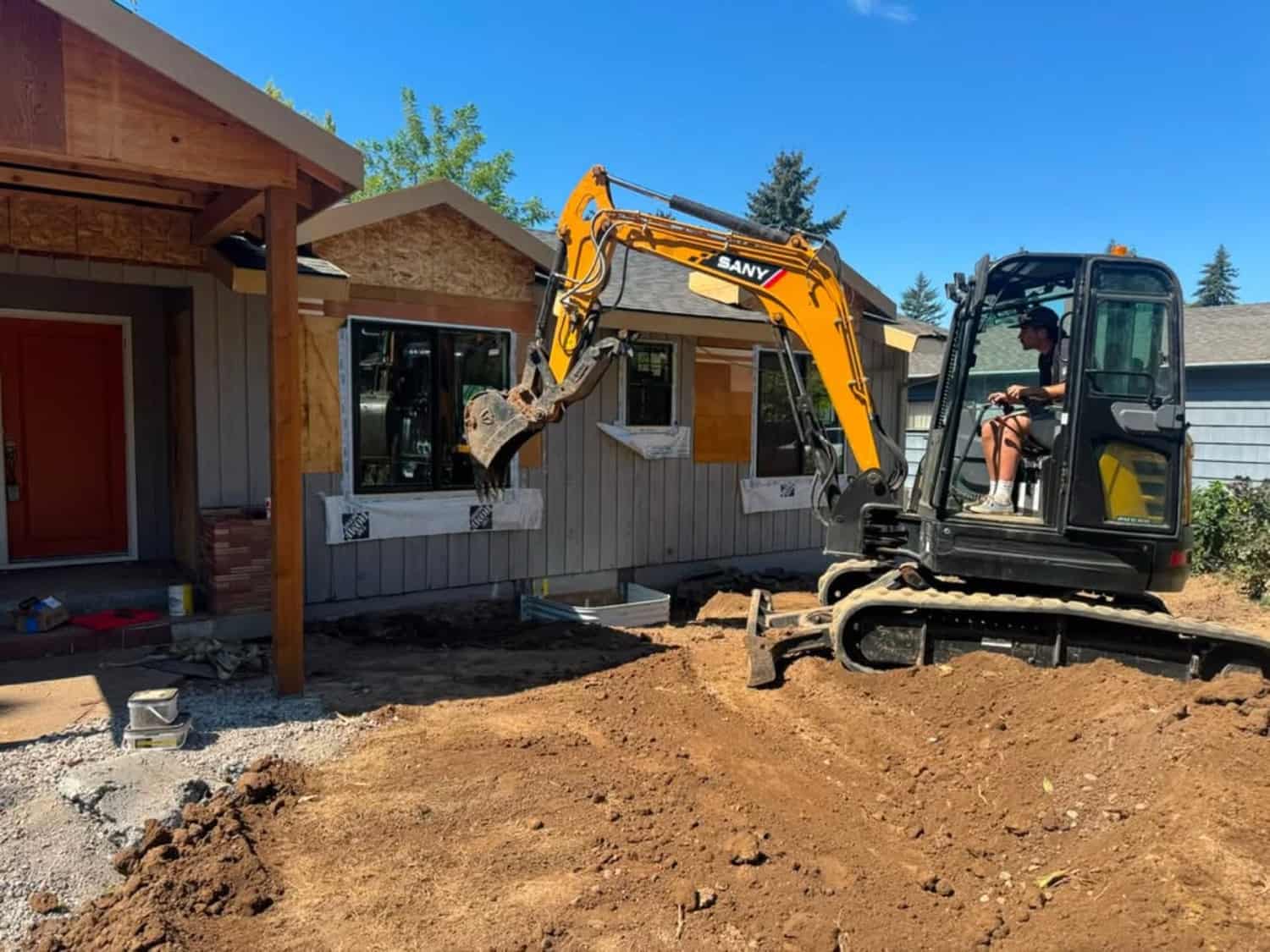
The excavation itself is the most disruptive part — landscaping, patios, walkways, and anything within a few feet of the house will be disturbed. This is why it's smart to combine waterproofing with other foundation-area work (like French drain installation or regrading) if you're already digging.
Cost in Portland
Dampproofing a new foundation (during construction): $1,500 to $4,000. Cheap because the walls are already exposed.
Full waterproofing system on a new foundation (during construction): $5,000 to $10,000. More expensive but done while the walls are open — no excavation cost.
Retrofitting waterproofing on an existing home: $8,000 to $20,000+. The excavation is the major cost driver — exposing the walls of an existing home means digging 6-8 feet deep around the perimeter, working around landscaping and utilities, and restoring everything afterward.
Partial waterproofing (one or two walls): $3,000 to $8,000. If only one side of the house has water problems (common when one side faces uphill), waterproofing just that section reduces cost significantly.
The cost of not waterproofing, when waterproofing is needed, is worth considering. Foundation wall replacement runs $20,000 to $50,000+. Mold remediation runs $2,000 to $10,000. Structural repairs from settling can exceed $30,000. Waterproofing is the prevention.
Interior vs. Exterior Waterproofing
Everything described above is exterior waterproofing — working from the outside of the foundation. There's also interior waterproofing, which manages water that has already entered the space.
Interior systems typically include a perimeter drain channel along the base of the interior walls, connected to a sump pump. Water that enters through the walls or floor is captured by the drain channel and pumped out. Some systems include an interior membrane on the walls.
Interior waterproofing is cheaper (no excavation) and less disruptive, but it manages water rather than preventing it from reaching the wall. The wall still gets wet — you're just catching it inside before it damages the space. For finished basements or homes where exterior excavation isn't feasible (attached townhomes, zero-lot-line homes), interior systems are the practical solution.
For most detached Portland homes with accessible perimeters, exterior waterproofing is the better long-term fix.
Get an Assessment
If you're not sure whether your Portland home's foundation has dampproofing, waterproofing, or nothing at all — or if you're seeing signs of moisture — call (503) 983-6984 or request a free estimate. We'll assess the situation and recommend the right solution for your specific home and budget.