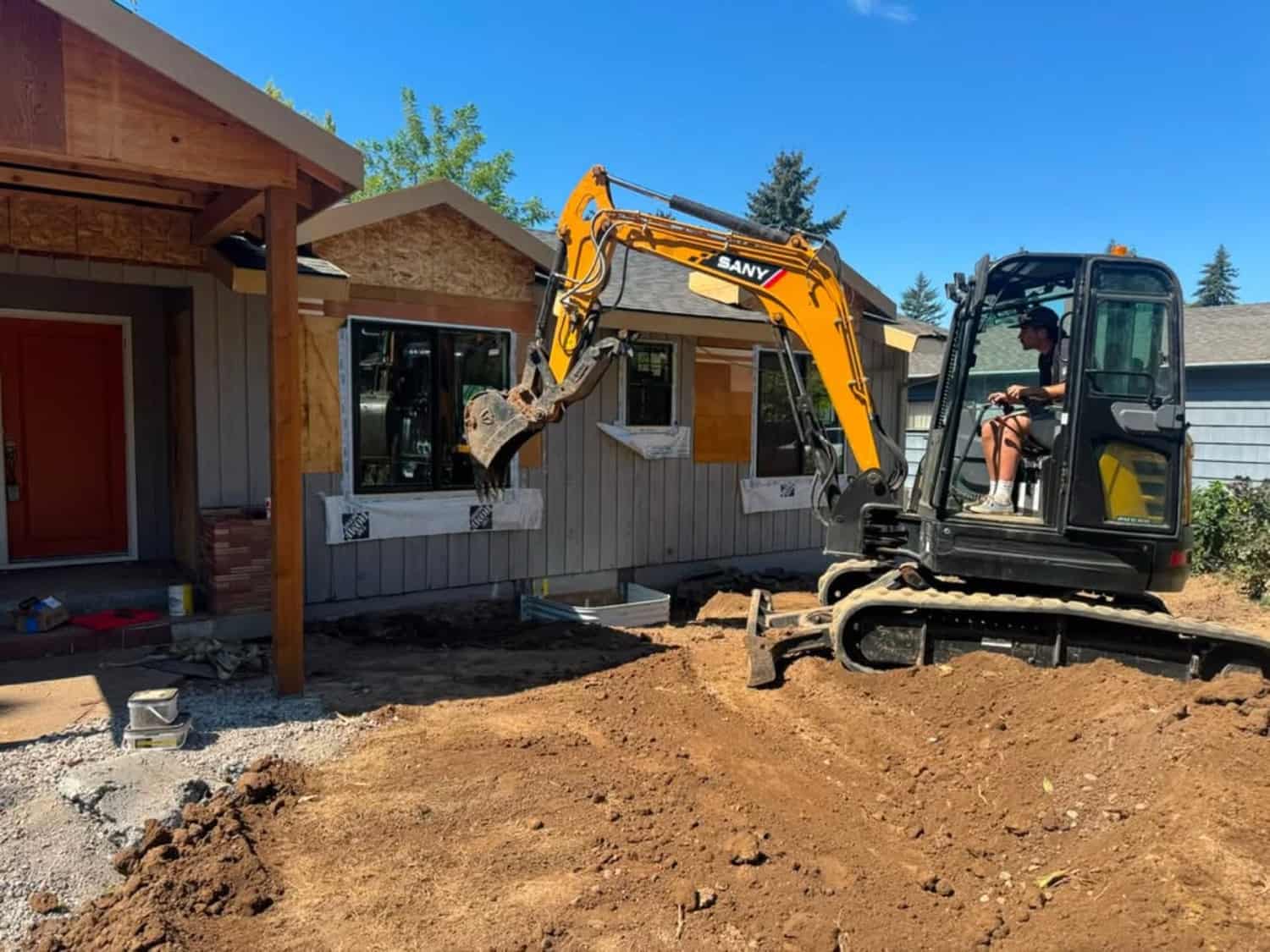
How to Fix a Soggy Yard in Portland, OR
Standing water in your Portland yard? Here's what causes soggy yards in Portland, the best drainage fixes, and what each solution costs.
Portland's rain is great for the trees. It's less great for your yard. If sections of your lawn stay waterlogged for days after a storm, if walking on the grass means sinking into mud, or if standing water refuses to drain, you have a drainage problem — and it won't fix itself.
A soggy yard isn't just an inconvenience. Standing water breeds mosquitoes, kills grass, promotes mold and fungal growth, and if it's close to the house, it sends moisture toward your foundation. The good news is that every soggy yard has a fixable cause. Here's how to figure out what's going on and what to do about it.
Why Your Portland Yard Holds Water
There are four common causes, and your yard might have more than one.
Compacted Soil
Portland's most common culprit. Heavy clay soil — widespread across East Portland, Gresham, Milwaukie, and Clackamas — doesn't absorb water well even when it's healthy. When that clay gets compacted by foot traffic, vehicles, or construction, it becomes nearly impermeable. Water sits on the surface because it literally can't soak in.
Signs it's compaction: water pools broadly across flat areas (not just low spots), the ground feels hard and dense when dry, and grass struggles to grow.
Poor Grading
The yard slopes toward the house or toward a flat area with no outlet. Water flows downhill and collects wherever the grade creates a bowl. This is especially common in yards that have been relandscaped, had fill added, or had structures (decks, patios, sheds) built that changed the natural drainage pattern.
Signs it's grading: water follows visible paths to specific low spots, the same areas flood every time, and the wet spots are in predictable locations relative to the slope.
High Water Table
In some Portland neighborhoods — particularly near the Willamette and Columbia rivers, in the Columbia Corridor, and in low-lying areas of Beaverton, Tigard, and Tualatin — the water table rises during the wet season (October through May). When groundwater is close to the surface, the soil stays saturated from below even when it's not raining.
Signs it's the water table: the entire yard is uniformly damp (not just low spots), the problem is worst in winter and spring regardless of recent rainfall, and digging a 2-foot hole results in standing water within a few hours.
Downspout Discharge
Your roof collects a massive amount of water. A 1,500 square foot roof in Portland collects roughly 37,000 gallons of water per year. If the downspouts dump that water right next to the house or into the yard without underground drainage, it pools and saturates the surrounding area.
Signs it's downspouts: the wettest spots are directly adjacent to downspout discharge points, and the problem is worse on the sides of the house with more roof area draining to them.
The Fixes
1. French Drain
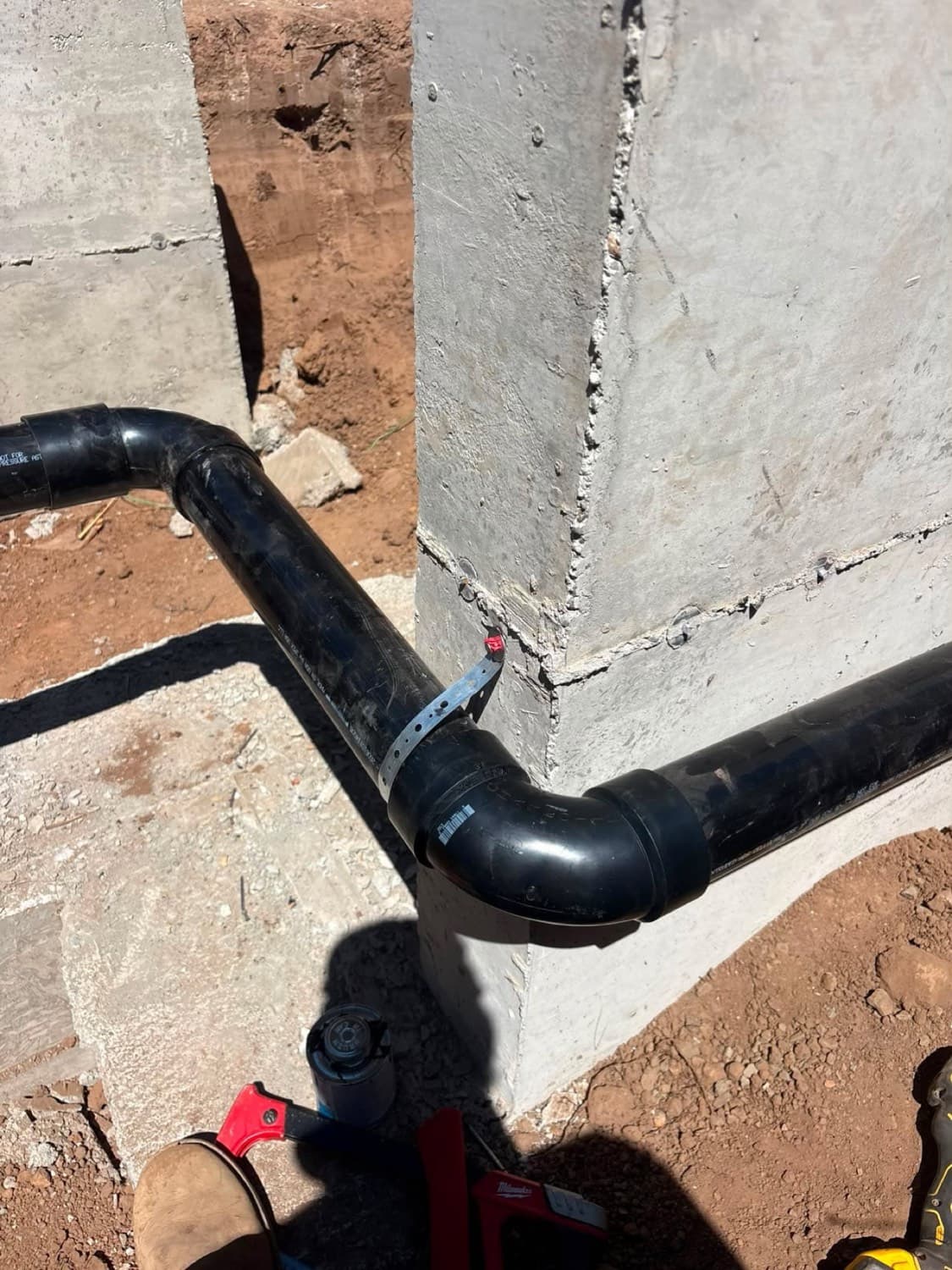
A French drain is the most common and most effective fix for a persistently soggy yard. It's a gravel-filled trench with a perforated pipe that collects water across its length and carries it to a discharge point — a dry well, storm drain, or lower area of the property.
For a soggy yard, the French drain is typically installed across the wet area, running perpendicular to the slope so it intercepts water flowing through the soil. Multiple French drain lines can be installed in a grid pattern for large areas.
Best for: broad areas of saturation, subsurface water flowing through the soil, clay soil that doesn't absorb.
Cost: $2,000 to $6,000 depending on length and depth.
2. Dry Well
A dry well is an underground chamber that collects water and lets it slowly percolate into the surrounding soil. It's best used as the discharge point for a French drain or downspout drain system rather than as a standalone fix for a soggy yard.
Best for: collecting and dispersing water from a specific source (downspouts, sump pump, French drain discharge). Works well in soil with decent percolation — less effective in heavy clay.
Cost: $2,000 to $5,000 installed.
3. Regrading
If the problem is surface water flowing to the wrong place, regrading reshapes the yard so water flows away from the house and toward a proper discharge point. This may involve bringing in fill dirt to raise low areas and creating swales (shallow, wide channels) to direct surface flow.
Best for: localized ponding in low spots, yards that slope toward the house, areas where the grade was disturbed by construction or landscaping.
Cost: $2,000 to $8,000 depending on the area and how much soil needs to move.
4. Downspout Drain Lines
Underground pipes connected to your downspouts that carry roof runoff away from the house to a dry well, street, or lower area. This is one of the simplest and most impactful fixes — getting 37,000 gallons of annual roof runoff out of the yard and into a proper drainage system.
Best for: soggy areas near the house caused by downspout discharge.
Cost: $1,500 to $3,000 for the typical residential installation.
5. Aeration and Soil Amendment
For mild compaction on otherwise well-draining soil, core aeration (pulling small plugs of soil out of the lawn) can improve water absorption. Adding compost or gypsum to clay soil can improve structure over time. This is a DIY or landscaper solution for mild cases.
Best for: light compaction on loamy soil. Not effective for heavy clay, grading problems, or high water tables.
Cost: $100 to $500 for aeration. Ongoing soil amendment is a long-term project.
6. Combined System
Most soggy yards in Portland benefit from a combination — typically regrading for surface flow plus a French drain for subsurface water plus downspout drains to manage roof runoff. The combination addresses all three water sources (surface, subsurface, and roof) rather than solving one while the others persist.
Cost: $5,000 to $12,000 for a combined system.
What Doesn't Work
Adding topsoil on top of the soggy area. If you dump a few inches of topsoil over a wet spot without fixing the underlying cause, you now have a slightly higher wet spot. The water will saturate the new soil just like it saturated the old soil. Topsoil goes on last, after the drainage is fixed.
Planting water-loving plants and calling it solved. Rain gardens and wet-tolerant plants are great, but they manage specific volumes of water in specific conditions. They don't fix a fundamentally broken drainage pattern, and they won't protect your foundation from water damage.
Waiting for it to dry out in summer. Portland summers are dry, and soggy yards do dry out. But the underlying cause doesn't go away. Next October, the problem comes right back.
The Right Approach
The fix depends on the cause, and the cause isn't always obvious from the surface. Water might be pooling in one spot because of grade, soil, subsurface flow, or a combination.
Walk the yard during or immediately after a heavy rain. Watch where water flows, where it collects, how fast it drains (or doesn't). Note which areas are wet and their relationship to the house, the slope, and the downspouts. That observation gives you — and your contractor — the information needed to design the right solution.
Get a Free Assessment
If your Portland yard turns into a swamp every winter, call (503) 983-6984 or request a free estimate. We'll walk the property, identify the cause, and recommend the drainage solution that actually fixes the problem. We serve Portland, Beaverton, Hillsboro, Tigard, Lake Oswego, Gresham, Oregon City, Happy Valley, and surrounding cities.