Sewer Line Excavation vs. Trenchless Repair in Portland: Pros, Cons & Cost
Should you excavate your failed sewer line or go trenchless? A Portland homeowner's guide to both methods — when each one works, what they cost, and how to decide.
Your sewer line has been camera-inspected, and the news isn't good. It's cracked, bellied, root-infiltrated, or collapsed — and snaking it every few months isn't a permanent solution. Now you need to decide: dig it up and replace it, or go trenchless?
Both methods fix the problem. But they work in different situations, cost different amounts, and have different tradeoffs. Portland's mix of aging clay pipe systems, mature trees, and heavy rain makes this decision more nuanced than the ads for trenchless repair suggest.
What Is Sewer Line Excavation?
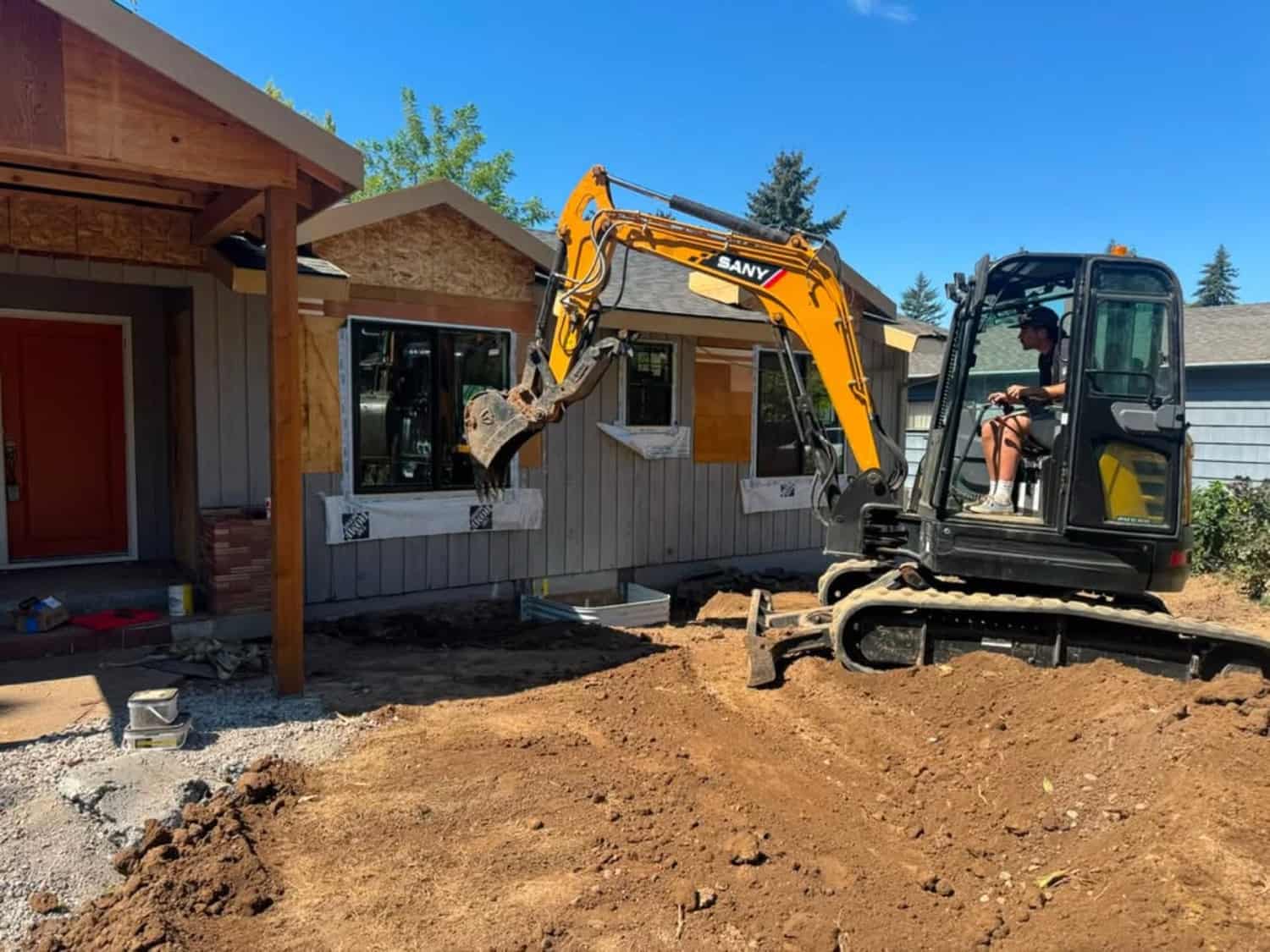
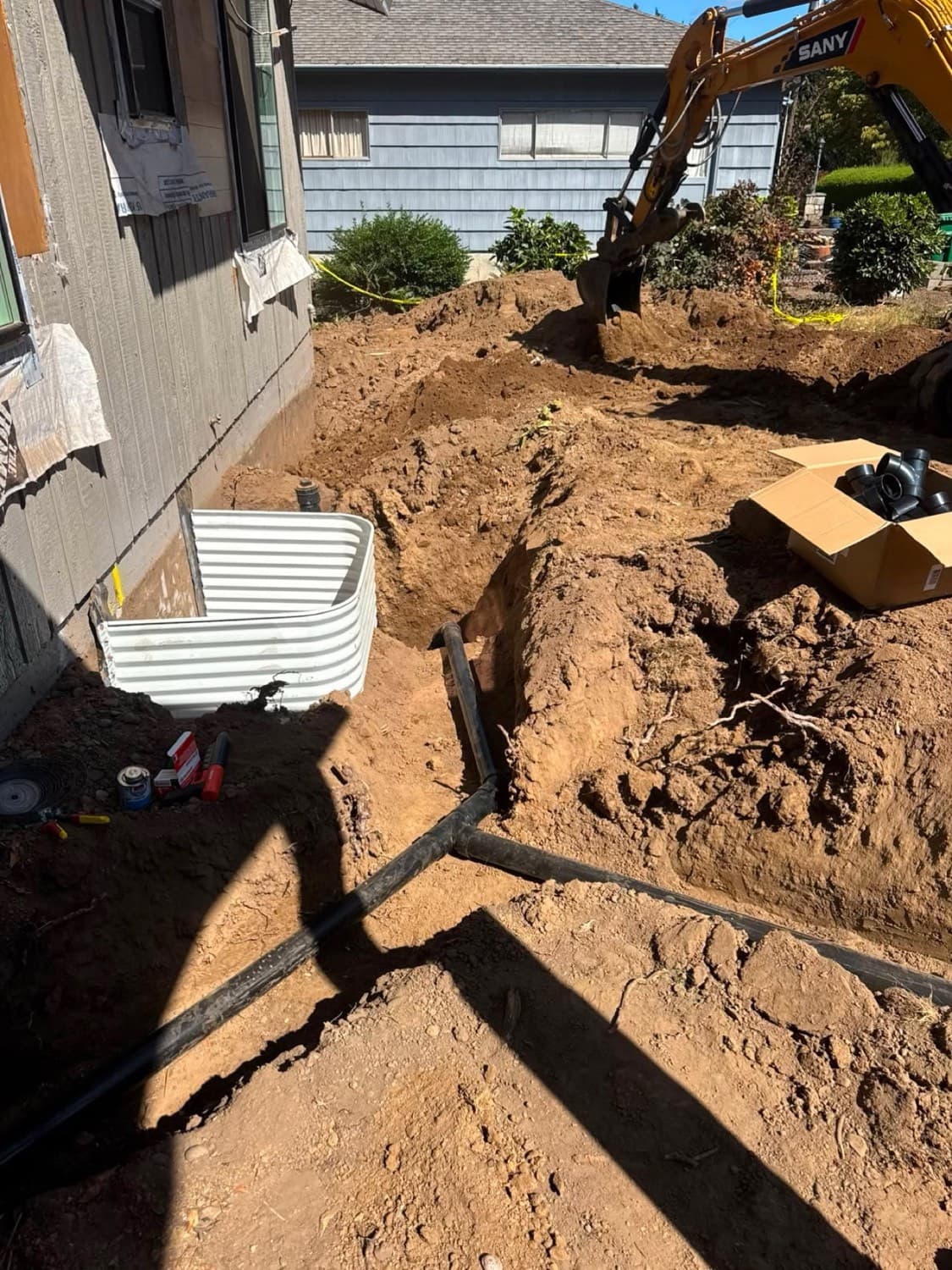
Sewer line excavation is the traditional method. A crew digs a trench to expose the damaged pipe, the plumber removes the old pipe and installs a new one, and the excavation crew backfills and restores the surface. It's straightforward, it works on any type of damage, and the result is a brand new pipe with a 50+ year lifespan.
The trench is typically 3 to 8 feet deep (sewer lines are deeper than water lines) and runs from the house to the city connection at the street. That can mean trenching through the yard, under a driveway, under a sidewalk, or through landscaping.
What Is Trenchless Repair?
Trenchless sewer repair avoids the full trench by working through the existing pipe. The two main methods are CIPP lining (cured-in-place pipe) and pipe bursting.
CIPP lining pushes a flexible liner coated with resin into the old pipe, inflates it against the pipe walls, and cures it with heat or UV light. The result is a new pipe-within-a-pipe. Access requires only one or two small pits at each end of the repair section.
Pipe bursting pulls a new pipe through the old one, breaking the old pipe outward as it goes. This also requires access pits at each end but replaces the old pipe entirely rather than lining it.
When Excavation Is the Better Choice
The pipe has collapsed or lost its shape. A CIPP liner needs a round pipe to conform to. If sections have collapsed, caved in, or deformed significantly, a liner can't be pulled through or won't seal properly. Excavation and full replacement is the only option.
The pipe has severe bellying. A belly (a low spot where the pipe sags) collects waste and water. A liner follows the contour of the existing pipe — including the belly. It won't fix the grade problem. Excavation lets you re-lay the pipe at the correct slope.
There's an offset joint or a complete break. When pipe sections have shifted apart or separated entirely, there's no continuous path for a liner. Excavation gives the plumber access to realign or replace the affected sections.
You need to change the pipe's route or size. Trenchless methods follow the existing pipe path. If the route needs to change (to avoid a new obstruction or connect to a different location) or the pipe needs to be upsized, excavation is required.
The pipe is orangeburg or severely deteriorated. Orangeburg (bituminized fiber pipe) was used in Portland from the 1940s through 1970s. It's essentially compressed tar paper, and by now it's usually deformed, crushed, or disintegrating. It's too far gone for lining — it needs full replacement.
Cost matters more than surface disruption. In many cases, excavation is cheaper than trenchless. If the pipe runs through a yard (not under a driveway or expensive hardscape), the surface restoration after excavation is minimal — reseed the grass and you're done.
When Trenchless Makes More Sense
The pipe runs under a driveway, patio, or structure. If excavating means demolishing and replacing a concrete driveway, a brick patio, or working under a deck, the surface restoration costs can exceed the trenchless premium. In these cases, trenchless saves money by avoiding the demolition and replacement.
The pipe has cracks or root intrusion but maintains its shape. This is the sweet spot for CIPP lining — the pipe is failing but structurally intact enough to accept a liner. Roots are cut out during cleaning, and the liner seals the joints so roots can't return.
There's mature landscaping you want to preserve. A 100-foot trench through a well-established yard with mature plants, irrigation, and hardscaping is disruptive. Trenchless minimizes surface disturbance to just the access pits.
Minimal access is available. In tight urban lots — common in inner Portland neighborhoods like Sellwood, Hawthorne, or Division — there may not be room for an excavator and dump trucks. Trenchless equipment has a smaller footprint.
Cost Comparison in Portland
Sewer line excavation: $3,000 – $10,000 for the excavation work (trenching, backfill, surface restoration). The plumber charges separately for the pipe replacement — typically $2,000 to $6,000 for the pipe work. Total project: roughly $5,000 to $16,000.
Trenchless CIPP lining: $6,000 – $12,000 for the lining (includes cleaning, camera inspection, and the liner). Access pits, if needed, add $1,000 to $2,000.
Trenchless pipe bursting: $7,000 – $15,000 including access pits.
The price gap narrows or reverses when excavation requires demolishing and replacing hardscape. A $3,000 driveway demolition and $7,000 driveway replacement on top of the excavation cost can push the total well past the trenchless price.
Portland-Specific Factors
Clay pipes. Many Portland homes built before 1980 have vitrified clay sewer lines. Clay is durable but the joints are vulnerable to root intrusion and shifting. If the clay pipe's joints are infiltrated but the pipe segments are intact, CIPP lining is often a good fit. If the joints have separated or the pipe has cracked, excavation may be necessary.
Root intrusion. Portland's mature trees — particularly maples, oaks, and large conifers — send roots into sewer line joints. Trenchless lining seals the joints and prevents root re-entry. But if roots have crushed or deformed the pipe, lining won't work and excavation is needed.
High water table. During Portland's wet season, groundwater can fill the trench faster than the crew can work. An experienced excavation crew manages this with dewatering pumps, but it adds time and cost. Trenchless methods are less affected by high water tables since the work happens inside the pipe.
Combined sewers. Parts of Portland still have combined sewer and stormwater systems. Work on combined sewer lines may have additional requirements and permitting. Your plumber and the city will coordinate on this.
How to Decide
Start with a camera inspection. A plumber runs a camera through the line and identifies exactly what's wrong and where. With that footage, both you and the contractor can make an informed decision.
If the camera shows cracks, root intrusion at joints, or minor damage with the pipe maintaining its round shape — get quotes for both methods and compare total costs including surface restoration.
If the camera shows collapse, severe bellying, offset joints, or orangeburg pipe — excavation is likely your only option. Get quotes from excavation contractors who specialize in sewer line work.
Get a Free Estimate
If your Portland sewer line needs excavation, call us at (503) 983-6984 or request a free estimate. We handle the excavation, trenching, backfill, and surface restoration — and we coordinate directly with your plumber to minimize the time your sewer is offline.